Key Takeaways
- Alcohol is the most widely abused drug in the United States, with 46.6% of Americans reporting past-month use due to its legal status and social acceptance.
- Nicotine and marijuana remain the second and third most common substances of abuse, with rising rates of vaping and legalized cannabis contributing to their prevalence.
- Prescription medications, particularly stimulants like Adderall and opioids like Hydrocodone, represent a major abuse category that often begins with legitimate medical treatment.
- Legal substances often cause more societal harm than illicit drugs because they are culturally normalized and integrated seamlessly into daily professional and personal lives.
- Effective recovery requires a systemic approach that addresses co-occurring mental health conditions alongside the addiction, rather than treating the substance abuse in isolation.
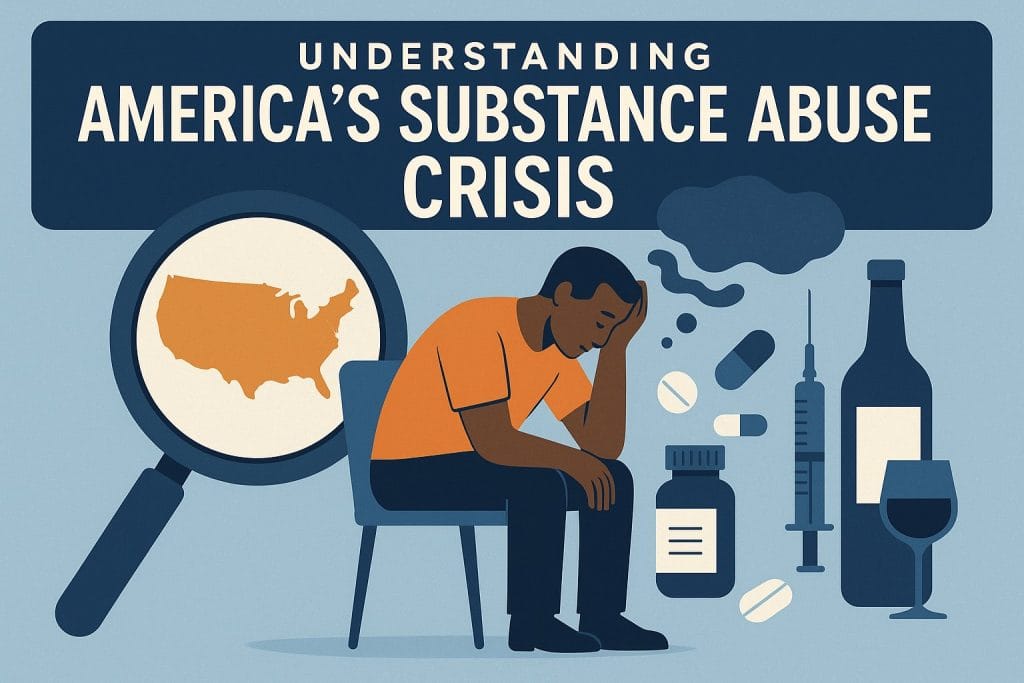
Understanding America’s Substance Abuse Crisis
When most people think about drug abuse in America, their minds immediately jump to illegal substances like cocaine, heroin, or methamphetamine. The reality, however, tells a different story. Alcohol remains the most widely abused drug in the United States, followed by nicotine and marijuana. This fact surprises many people who don’t consider these legal substances in the same category as illicit drugs, yet the impact on individuals, families, and communities is equally devastating.
At Seasons in Malibu, we’ve witnessed firsthand how substance abuse affects people from all walks of life. The substances causing the most harm aren’t always the ones making headlines. Understanding which drugs are most commonly abused helps us recognize warning signs in ourselves and loved ones, and knowing these patterns can be the first step toward seeking help.
The Reality of Alcohol Abuse in America
Alcohol’s legal status and social acceptance make it particularly dangerous. According to recent data, 46.6% of Americans reported past-month alcohol use, making it by far the most prevalent substance used in the country. This widespread availability and cultural normalization create an environment where alcohol abuse can develop gradually, often without immediate recognition from the person struggling or their loved ones.
The consequences of alcohol abuse extend far beyond the individual. Alcohol-related deaths, drunk driving accidents, domestic violence incidents, and health complications make this legal substance one of the most harmful drugs in terms of overall societal impact. Many people who come to our facility initially minimize their alcohol use because “everyone drinks,” not realizing they’ve crossed the line from social drinking to dependence.
What makes alcohol particularly insidious is its ability to integrate seamlessly into daily life. Unlike illegal drugs that require clandestine behavior, alcohol can be consumed openly at restaurants, homes, and social gatherings. This accessibility means that people can maintain heavy drinking patterns while appearing to function normally in their professional and personal lives, at least initially.
Nicotine: The Overlooked Epidemic
While smoking rates have declined over the past few decades, nicotine remains a significant public health concern. Recent statistics show that 27.8% of Americans reported past-year nicotine use, with 50.7% having used it in their lifetime. These numbers reflect traditional cigarettes, cigars, smokeless tobacco, and the rapidly growing category of vaping products.
The rise of e-cigarettes and vaping devices has created a new generation of nicotine users, particularly among young people who might never have picked up a traditional cigarette. These products are often marketed as safer alternatives, but they still deliver highly addictive nicotine and come with their own health risks. We’ve seen an increasing number of younger clients seeking help for nicotine addiction, many of whom started with vaping.
Nicotine addiction is unique in that it’s often treated as less serious than other substance dependencies, yet it can be incredibly difficult to overcome. The physical withdrawal symptoms combined with the psychological habit patterns make quitting a significant challenge. Many people attempt to quit multiple times before achieving lasting success.
Marijuana’s Growing Prevalence
As marijuana legalization expands across states, usage rates have climbed steadily. Current data shows that 22.3% of people aged 12 and older reported past-year marijuana use, up from 19.0% in 2021. This increase correlates directly with changing legal status and shifting public perception about the drug’s safety.
The conversation around marijuana has become increasingly complex. While some people use it medicinally with genuine therapeutic benefits, others develop problematic use patterns that interfere with their daily functioning. At our treatment center, we work with individuals who struggle with marijuana dependence, experiencing withdrawal symptoms, motivation issues, and difficulty managing their use despite negative consequences.
One challenge with marijuana abuse is the persistent myth that it’s not addictive or harmful. While marijuana may be less physically dangerous than some substances, psychological dependence is real, and for some individuals, particularly those who start using at a young age, it can significantly impact brain development and mental health.
The Prescription Drug Problem
Prescription medications represent another major category of abused substances in America. Prescription stimulants like Adderall and Ritalin are the most commonly abused prescription drugs, with 10.2 million people aged 12 and older reporting use in 2022. These medications, designed to treat ADHD and certain other conditions, have become popular among students and professionals seeking enhanced focus and productivity.
Prescription opioids follow closely behind stimulants in terms of abuse rates. Hydrocodone stands out as the most popular prescription opioid specifically, with 3.6 million misusers. These medications, initially prescribed for legitimate pain management, can quickly lead to dependence. We’ve treated countless individuals who began taking opioids after surgery or injury, only to find themselves unable to stop when the prescription ended.
What makes prescription drug abuse particularly challenging is that it often starts legally. People don’t see themselves as “drug users” because a doctor prescribed their medication. This perception can delay recognition of a problem and postpone seeking help. Additionally, the ease of obtaining these medications through doctor shopping, family medicine cabinets, or online sources makes them readily accessible.
Emerging Trends in Substance Abuse
Recent data reveals some concerning trends in drug use patterns. Hallucinogen use has increased to 3.6% of the population reporting past-year use, up from 2.7% in 2021. This category includes substances like LSD, psilocybin mushrooms, and MDMA. While some research explores potential therapeutic applications for these substances, recreational use carries significant risks, particularly for individuals with underlying mental health conditions.
Interestingly, some substances have seen declining use rates. Prescription opioid misuse dropped to 2.6% in 2024 from 3.0% in 2021, and cocaine use fell to 1.5% from 1.7% during the same period. These decreases suggest that public health efforts and increased awareness may be having some positive impact, though the numbers remain concerning.
The substance abuse field continues to evolve as new drugs emerge and old ones resurface in different forms. Synthetic cannabinoids, novel stimulants, and designer drugs present ongoing challenges for treatment providers and public health officials. Staying informed about these trends helps us better serve our clients and adapt our treatment approaches.
The Scope of Substance Use Disorders
Beyond casual or experimental use, substance use disorders affect a staggering number of Americans. Approximately 16.8% of Americans aged 12 and older, representing 48.4 million people, had a past-year substance use disorder as of 2024. These disorders range from mild to severe and can involve one or multiple substances.
A substance use disorder goes beyond simply using drugs or alcohol. It’s characterized by an inability to control use despite negative consequences, spending significant time obtaining or using substances, experiencing cravings, and continuing use even when it causes problems in relationships, work, or health. At Seasons in Malibu, we use evidence-based assessments to determine the severity of each client’s disorder and develop personalized treatment plans.
The good news is that substance use disorders are treatable conditions. With proper intervention, support, and commitment to recovery, people can and do overcome addiction. We’ve witnessed countless individuals transform their lives, rebuild relationships, and discover fulfillment in sobriety.
Geographic Patterns in Drug Abuse
Drug abuse doesn’t affect all regions equally. West Virginia has the highest estimated drug use rate at 6,297 per 100,000 people, followed by the District of Columbia at 5,826, Kentucky at 5,324, Tennessee at 5,162, and New Mexico at 4,967. These geographic variations reflect complex interactions between economic factors, prescription practices, drug trafficking patterns, and available treatment resources.
Understanding these regional differences helps inform targeted interventions and resource allocation. States with higher rates often struggle with economic challenges, limited healthcare access, and historical patterns of substance abuse that have become entrenched in communities. Breaking these cycles requires comprehensive approaches that address not just individual addiction but also systemic factors contributing to substance abuse.
Why Legal Substances Dominate Abuse Statistics
The fact that alcohol and nicotine top the list of most abused drugs in America isn’t coincidental. Legal substances benefit from widespread availability, social acceptance, and aggressive marketing. People can purchase alcohol at countless retail locations, and while tobacco advertising has become more restricted, nicotine products remain easily accessible.
This legal status creates a false sense of safety. Many people assume that if a substance is legal, it must be relatively harmless. This thinking ignores the reality that legality and safety are not synonymous. Alcohol and nicotine cause more deaths annually than all illegal drugs combined, yet they face less social stigma and regulatory oversight.
At our treatment center, we emphasize that addiction is addiction, regardless of the substance’s legal status. The brain doesn’t distinguish between legal and illegal drugs when developing dependence. The same neurological pathways are affected, and the same treatment principles apply whether someone is struggling with alcohol, heroin, or prescription medications.
The Role of Co-Occurring Mental Health Conditions
Substance abuse rarely exists in isolation. Many people who struggle with drug or alcohol problems also face mental health challenges like depression, anxiety, trauma-related issues, or bipolar disorder. This relationship works both ways: mental health conditions can lead people to self-medicate with substances, while substance abuse can trigger or worsen mental health symptoms.
We take an integrated approach to treatment, addressing both substance use and mental health simultaneously. Treating only the addiction while ignoring underlying mental health issues sets people up for relapse. Similarly, managing mental health symptoms without addressing substance abuse leaves a significant problem unresolved. Comprehensive care requires attention to the whole person.
Recognizing Warning Signs
Identifying substance abuse early improves treatment outcomes significantly. Warning signs vary depending on the substance but often include changes in behavior, appearance, or social circles. Someone struggling with substance abuse might become secretive, experience financial problems, neglect responsibilities, or show physical symptoms like changes in sleep patterns, appetite, or energy levels.
For alcohol specifically, watch for increased tolerance, drinking alone or at unusual times, making excuses to drink, or experiencing withdrawal symptoms when not drinking. With prescription drugs, signs might include doctor shopping, running out of prescriptions early, or taking medications in ways other than prescribed. Marijuana abuse often manifests as decreased motivation, memory problems, or prioritizing use over other activities.
If you recognize these signs in yourself or someone you care about, reaching out for help is crucial. Substance abuse tends to worsen over time without intervention. What starts as occasional use can progress to dependence, and dependence can lead to severe health consequences, relationship destruction, and life-threatening situations.
Treatment Approaches That Work
Effective addiction treatment addresses the physical, psychological, and social aspects of substance abuse. At Seasons in Malibu, we combine evidence-based therapies with personalized care plans tailored to each client’s unique needs and circumstances. This comprehensive approach gives people the best chance at lasting recovery.
Treatment typically begins with detoxification when necessary, followed by intensive therapy to address the underlying causes of addiction and develop healthy coping strategies. We incorporate individual counseling, group therapy, family involvement, and holistic treatments like mindfulness practices and fitness programs. The goal isn’t just to stop using substances but to build a fulfilling life in recovery.
Recovery is possible regardless of which substance someone has been using or how long they’ve struggled. We’ve seen people overcome decades of alcohol dependence, prescription drug addiction, and polysubstance abuse. The key is finding the right treatment approach, committing to the process, and building a strong support system for ongoing recovery.
Moving Forward: Hope and Healing
Understanding that alcohol is the most abused drug in the United States, followed by nicotine and marijuana, helps contextualize America’s substance abuse crisis. These aren’t distant problems affecting only certain populations; they touch families and communities across all demographics and geographic regions.
If you’re struggling with substance abuse, know that you’re not alone and help is available. The statistics might seem overwhelming, but behind every number is a person with the potential for recovery. At Seasons in Malibu, we’re committed to providing compassionate, effective treatment that addresses the root causes of addiction and supports lasting change.
Recovery begins with a single decision to seek help. Whether you’re concerned about your own substance use or worried about someone you love, reaching out is an act of courage that can change everything. The most abused drugs in America cause tremendous harm, but with proper treatment and support, people can break free from addiction and reclaim their lives.
FAQs
1. What is the single most abused drug in the U.S.?
Alcohol is the most abused substance, far outpacing illegal drugs. Recent data indicates that nearly half of the population (46.6%) engages in past-month alcohol use, leading to significant societal and health consequences.
2. Why are legal substances like alcohol and nicotine abused more than illegal drugs?
Legal substances benefit from widespread availability, aggressive marketing, and a lack of social stigma. This accessibility creates a false sense of safety, allowing individuals to develop dependencies while appearing to function normally in society.
3. Is marijuana actually addictive?
Yes. While often perceived as harmless, marijuana can cause real psychological dependence. Usage can interfere with motivation, memory, and daily functioning, particularly for individuals who begin using at a young age or have underlying mental health conditions.
4. What are the common warning signs of a functional addiction?
Signs include increased tolerance, secrecy regarding use, financial strain, and prioritizing the substance over responsibilities. With alcohol specifically, warning signs often include drinking alone, making excuses to drink, or experiencing withdrawal symptoms when abstaining.
5. How does Seasons in Malibu treat these addictions?
We utilize an integrated, doctorate-led approach that addresses both the physical addiction and the underlying mental health triggers. Our treatment combines medical detoxification (when necessary) with evidence-based therapies and holistic care to build a sustainable life in recovery.
Sources
- https://www.samhsa.gov/newsroom/press-announcements/20250728/samhsa-releases-annual-national-survey-on-drug-use-and-health
- https://worldpopulationreview.com/state-rankings/drug-use-by-state
- https://www.cdc.gov/nchs/products/databriefs/db549.htm
- https://www.absoluteadvocacy.org/most-commonly-abused-drugs/
- https://nida.nih.gov/news-events/news-releases/2025/12/reported-use-of-most-drugs-remains-low-among-us-teens
- https://drugabusestatistics.org/drug-related-crime-statistics/
