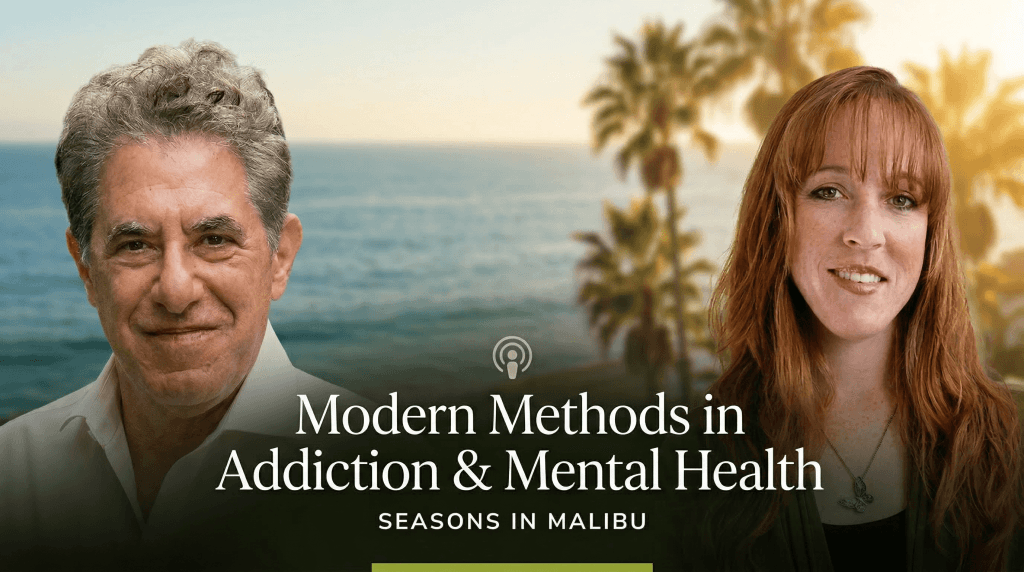
Welcome to Modern Methods in Addiction and Mental Health, the podcast from Seasons in Malibu where we go beyond the brochure and into the real conversations shaping recovery today.
In this episode, CEO Don Varden sits down with Clinical Director Dr. Tiffany Towers for a wide-ranging conversation about what it means to truly meet a client where they are. From dual diagnosis care and trauma-informed treatment to equine therapy, the “magic of the milieu,” and why aftercare is everything, Dr. Towers pulls back the curtain on the philosophy, the people, and the small moments that actually change lives at Seasons in Malibu.
Whether you’re a family member searching for answers, someone considering treatment, or a clinician curious about a different model, this conversation is for you.
Listen to the Episode
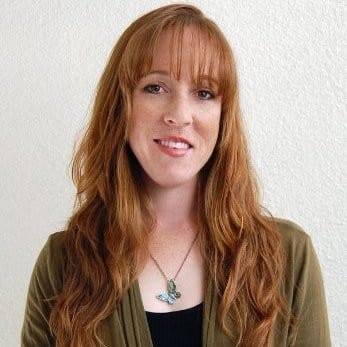
Dr. Tiffany Towers, Clinical Director: You’re listening to Modern Methods in Addiction and Mental Health, brought to you by Seasons in Malibu. I’m Dr. Tiffany Towers, clinical director. Subscribe and follow anywhere you get your podcasts.
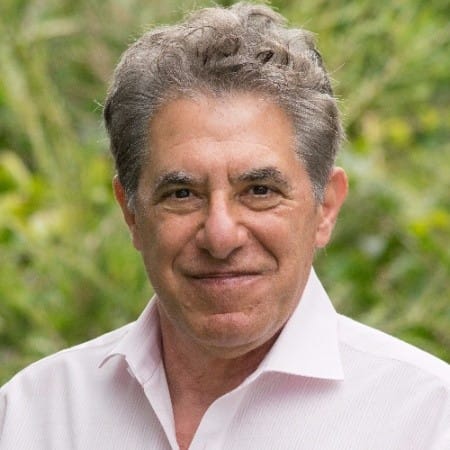
Don Varden, CEO: I’m Don Varden, I’m the CEO of Seasons in Malibu. And with me is Dr. Tiffany Towers, our wonderful clinical director. How did someone like you become a psychologist?
Dr. Tiffany Towers, Clinical Director: Well, I was raised by two doctors in the field. And so it’s kind of the family business and in my blood and second nature. Studying human behavior and why people do the things that they do has always been fascinating to me and figured I would be another doctor in the family.
Don Varden, CEO: So if you look back on your training years, is there a moment or a mentor that really changed the way you see this work?
Dr. Tiffany Towers, Clinical Director: I will say that early in my training, one of my first patients struggled with addiction actually, and he made a comment about how addiction just wants to get me alone in a room so that I die. And I could really feel the despair in that moment. And from a human to human level, my response was, well, you’re not alone in a room right now, and let’s see what we can do to make sure that doesn’t happen.
Don Varden, CEO: How would you describe your role at Seasons in Malibu?
Dr. Tiffany Towers, Clinical Director: I would say my role is to ensure that the best experience possible for our clients, as well as supporting our clinical team and the staff in providing that experience, all happens as smoothly and in line with our core philosophies as possible.
Don Varden, CEO: And if you had to put your practice philosophy into a few sentences, what would that be?
Dr. Tiffany Towers, Clinical Director: That everybody comes to a decision to make a change at a different pace in their life, and it’s okay to start small and work your way to bigger changes. We don’t need to minimize whatever progress we can make in where we want to see ourselves in the future. As well as being open and curious to explore all the different parts of ourselves that can contribute to our quality of life. So that’s physical health, mental health, spiritual health, family health, all the things.
Don Varden, CEO: So you work with complex dual diagnosis and primary mental health clients. What do people often misunderstand about these clients?
Dr. Tiffany Towers, Clinical Director: Well, sometimes there are families who have the impression that this loved one is broken or a problem and they need to go away somewhere to be fixed. And what we come to discover is that there are strengths within a person who is still struggling, and where we can help them lift themselves up, as well as educate the family so that they can see mental health is not something to be feared or stigmatized, but it is a human process. And there are many different evidence-based methods to approach healing that they can experience here at Seasons.
Don Varden, CEO: What are some of the ways you help clients move from “I’m broken” to “I’m capable of change”?
Dr. Tiffany Towers, Clinical Director: Some of the times when people first come to treatment, I’ve noticed that our clinical team has to hold out hope for the possibility for them until they can develop it themselves. And so if someone is speaking to the feeling of brokenness, there can still be a chance of exploring, well, how did we get to that feeling? And then where do we want to begin some form of repair? And repair can look different to everybody. It can be about building bridges to people in our lives, or it can be about cutting ties to certain people in our lives. And there’s no wrong way to go about it, but it’s very personal and individualized what that discovery is over time.
Don Varden, CEO: So as a clinical leader, what kind of culture are you trying to build on your team?
Dr. Tiffany Towers, Clinical Director: I’m always trying to build a culture of communication and collaboration among the team, because we have such a multi-dimensional and experienced and educated band of clinicians. Everybody in the modality that they specialize in brings value and insight about a client’s recovery process. So I’m always encouraging people to not think that their contribution to someone’s residential stay is too small. And in fact, I’ll even explore that with some of the floor staff that we have who are not clinicians, but who spend a lot of time with the clients, just them showing up in a non-judgmental and supportive way can contribute to someone’s healing.
Don Varden, CEO: So if a family is listening and they’re scared, maybe burned by past treatment experiences, what would you want to say to them?
Dr. Tiffany Towers, Clinical Director: I would want to say I apologize on behalf of the industry for the past wounds that they’ve experienced. And to ask them to continue to have hope and faith that there will be a path upwards towards healing as opposed to staying in despair. The fact that they’re even considering another treatment option is a sign of hope, because yes, you can be burned in the past or there can be relapses that are scary or disappointing or frustrating. Yet there’s always something that can be learned through that discovery of what didn’t work before and what is it that was missing before that I can now be open to exploring this time around.
Don Varden, CEO: So for someone who has been in multiple treatment programs before, what do you want them to feel within their first 24 to 48 hours at Seasons?
Dr. Tiffany Towers, Clinical Director: I would hope that they would feel safe, supported, and seen in a way that maybe they hadn’t considered before. We do get some people who feel like this is my last shot at this. And my hope would be that they would feel as though, if this is my last shot or it feels like it’s my last shot, at least I’m with a team of people who have my back and are able to hold me up when I feel as though I’ve stumbled for the 30th time.
Don Varden, CEO: So that leads me to, how do you define success in treatment, especially knowing that recovery is not a straight line?
Dr. Tiffany Towers, Clinical Director: In my view, success is not just about maintaining sobriety. It may not even be about maintaining sobriety. That’s a wonderful outcome, but relapse does happen. My idea of success is someone feels grounded and safe in their own skin to make choices moving forward. And when they feel like they make a mistake or they have tried something and the outcome was not what they expected, that they still stay curious to keep going and trying another way.
Don Varden, CEO: What gives you hope right now in the mental health and addiction space?
Dr. Tiffany Towers, Clinical Director: What gives me hope is that there are so many people who are open to talking about these issues and not hiding it in a dark room by themselves, or not hiding it in shame, that families are open to talking about these issues. Because really, secrets are what keep people sick and feeling alone. And so the more that they can start to feel it’s okay to voice some of these things they’ve been holding inside, the more they’ll be able to get objective professional perspectives on it.
Don Varden, CEO: So going a different direction, what keeps you grounded outside of work? I know you have a horse. What’s your horse’s name?
Dr. Tiffany Towers, Clinical Director: My horse’s name is Gimli. He is 25 years old, a paint and an angel. And he is a being that I can be present with without having to talk so much. There’s also an aspect, and this is a big reason why I’ve been a proponent of incorporating equine therapy in our program at Seasons, of being with a horse where you are just being you in the present moment and you don’t have to think too much, and the horse will be honest with you the whole time. And there’s a real beauty in that.
Don Varden, CEO: So what are you learning or curious about right now, professionally or personally?
Dr. Tiffany Towers, Clinical Director: I’m most curious to see where things go as far as people being open to exploring a combination of modalities, like what we do here at Seasons. We’ve got multiple modern methods of approaching recovery both in addiction and mental health spaces, and all of our modalities integrate together to create a holistic therapeutic picture. What I’m most curious about is if at lower levels of care, there will be more similar integrations of all these different approaches, so that when clients come time to leave and transition to aftercare, they feel like they can create that support in some form in their hometown.
Don Varden, CEO: And speaking of aftercare, how important do you think that is in the equation?
Dr. Tiffany Towers, Clinical Director: It is the key to the equation. Not everybody can have the opportunity to come to a place like Seasons. But the notion of it’s not a 30, 60, or 90-day fix to everything, there is a continuation and evolution of change that happens at various levels of care. Here you get 24/7 support and a whole team surrounding you. At lower levels of care, it becomes about navigating exposures to the real world without becoming derailed. Aftercare is really about establishing those avenues of finding support in lots of different ways, so that the progress can continue after they leave our lovely comfortable nest.
Don Varden, CEO: Let me ask you something different. How did you end up on a podcast with me?
Dr. Tiffany Towers, Clinical Director: We decided together that there was a point where the exclusivity that our clients experience in the high level of clinical care ought to be in some form shared with other people who can’t make it physically here. We wanted a vehicle where we could let our clinical team, as well as some professionals that we work with in the industry, have a platform to shine in what it is that they’re experts in, so that it could dispel some myths about treatment, or give people an opportunity to learn about the modalities we offer.
Don Varden, CEO: So if you could say something to someone who’s listening, what would it be?
Dr. Tiffany Towers, Clinical Director: I would say that it’s okay to ask for help.
Don Varden, CEO: Indeed. And that’s why we’re doing this podcast. I know you have a theatrical background among other things. Can you share an example of how drama or narrative work shifted something for a client or for yourself?
Dr. Tiffany Towers, Clinical Director: Before I came to Seasons, my dissertation research was in how drama therapy can help veterans reintegrating into civilian life, all the different facets of how they connect to different needs as they struggle with trauma. Where that gets incorporated here is that narrative therapy can really be a space where a person can examine what are the stories that I’m telling myself about myself, and where is that fair, and where is that maybe a little too pigeonholing? And how can I shift perspective so that I can write a different chapter moving forward?
Don Varden, CEO: So how do you help clinicians stay grounded and care for themselves while doing such emotionally heavy work?
Dr. Tiffany Towers, Clinical Director: We have treatment team meetings twice a week where the whole clinical team gets together to talk about how the clients are progressing, but also things they’re struggling with themselves. I’m always checking in with our clinical team individually as well. Because ultimately, what we model as clinicians as regards to self-care is really impactful to the clients that we’re speaking with.
Don Varden, CEO: When we hire or develop therapists, what qualities matter more to you than what’s on their resume?
Dr. Tiffany Towers, Clinical Director: I would say how they show up in a room is really important. If they can be professional in a way that’s still warm and compassionate, not acting as a client’s best friend, but having a warm, empathetic connection that still helps a client feel as though they’re in good hands and with an expert.
Don Varden, CEO: What are some of the small but meaningful moments in treatment that people might not see on a brochure, but that you think actually change lives?
Dr. Tiffany Towers, Clinical Director: One of the things that may seem small to some people, but to me there’s a heart aspect to it, is what I call the magic of the milieu. Because each of our houses has a maximum of six clients at a time, it’s a very personal experience. The combination of people who are seeking recovery in the house at a particular time, when they’re hanging out together in the downtime outside of sessions, something happens between different people, whether things they have in common or differences they discover, that can have a really powerful impact on the course of their recovery. Sometimes you can just see someone inspired by watching another person’s growth at the end of their stay when they’re at the beginning of their own.
Don Varden, CEO: So obviously you have a background in forensic psychology. How has that shaped the way you conceptualize clients and risk, even in a treatment setting like Seasons?
Dr. Tiffany Towers, Clinical Director: My background in forensic psychology trained me to see that even when someone is facing rather dire consequences or has experienced a lot of trauma from legal issues, there is still a human heart and a human mind inside of that person that can always make room for resilience to be developed. It’s not my place to judge what someone has been through in order to find a way to help them recover. And developing ways of looking at risk assessment, what is someone’s risk of relapse and what are the potential challenges, helps us get ahead of the curve so they don’t have to hit another bottom in the future.
Don Varden, CEO: So unlike a lot of places, Seasons is duly licensed in mental health as well as addiction. When a new client arrives, what are the first things you’re paying attention to beyond what’s written in the chart?
Dr. Tiffany Towers, Clinical Director: I’m always paying attention to what is it that’s bringing them in the door. Is it internal motivation, external motivation, some combination of the two? Are they in fact not motivated to make a change right now and they’re just doing their time because their family pushed them into treatment? And where is it that I can still connect with them such that, all right, if we are going to be spending some time together, what is a basis of agreement that we can make and build upon?
Don Varden, CEO: So what do you think will set our podcast apart for the listener?
Dr. Tiffany Towers, Clinical Director: I think what will set our podcast apart is the level of conversation with the experts that we’re going to be talking with, initially highlighting our clinical team members and giving them a chance to connect with the listeners and viewers in a way that they wouldn’t unless they were actually coming to treatment.
Don Varden, CEO: So what are some of the modalities that you see are most effective with clients today?
Dr. Tiffany Towers, Clinical Director: At Seasons, each client is assigned a primary therapist, and all of our primary therapists are licensed psychologists. They develop the treatment plan with the client and guide the rest of the clinical team in pacing toward treatment goals. Then there’s case management, which works on navigating the treatment stay and establishing an aftercare plan throughout. Other modalities that have been extremely effective are hypnotherapy, which is shown to be effective with both addiction and mental health struggles, as well as EMDR if it’s appropriate to address trauma or anxiety concerns.
Don Varden, CEO: And what is EMDR?
Dr. Tiffany Towers, Clinical Director: EMDR is an acronym for eye movement desensitization and reprocessing. It is an evidence-based modality to address primarily trauma, but there are other avenues of issues it can address as well. There’s been a significant amount of research to show that in some conditions, and in addressing certain specific traumas in particular, it can be highly effective.
Don Varden, CEO: And I know we also use brain spotting, which a lot of people haven’t heard about. What is brain spotting?
Dr. Tiffany Towers, Clinical Director: Brain spotting is sort of like a younger cousin to EMDR. It’s a newer modality, but still well researched and shown to be effective, and it works on the mind-body connection in reprocessing trauma in a way that’s less structured than EMDR. There’s still structure to it, but it’s more of a freer-form approach in each session, so that the client can feel a little bit more in control of their own pacing.
Don Varden, CEO: So what makes you decide to give one or the other, EMDR or brain spotting, or both to a client?
Dr. Tiffany Towers, Clinical Director: First priority when someone arrives is to address stabilization rather than processing trauma. We want to make sure the client is stabilized enough, grounded enough, has enough internal resources to then do the trauma work. Some initial sessions of EMDR and brain spotting work on resourcing, which is about helping with stabilization and grounding, and not about identifying and focusing on a particular traumatic event. And that’s part of why we have a really personalized approach: we take the client’s feedback as well as the clinical team’s observations and adjust the programming as necessary.
Don Varden, CEO: So I know at Seasons we also do somatic experience. What is that?
Dr. Tiffany Towers, Clinical Director: Somatic experience is another form of mind-body connection, really attuning to where there are places in your body where feelings or traumatic memories may be stored, and then how to safely and compassionately release that, such that there is an aspect of feeling a lot more comfortable and empowered.
Don Varden, CEO: So we talked about somatic experience, brain spotting, EMDR. What other modalities do we do here at Seasons in Malibu?
Dr. Tiffany Towers, Clinical Director: Before I get into the specific modalities, I want to make it clear that we highly emphasize individual sessions above groups. We have a small collection of clients in each house, six people max, so really throughout the day the emphasis is on one-on-one sessions with primary therapists, psychologists, and case management. Beyond that, we’ve got hypnotherapy, craniosacral therapy, DBT, EMDR and brain spotting, somatic experience, and the holistic modalities: yoga, meditation, acupuncture, and massage. We have spiritual therapy, equine therapy, and our health and fitness coaching team who work on establishing health behaviors clients can carry into the outside world. Our chefs are cooking amazing meals every day and are happy to talk about nutrition as well.
Don Varden, CEO: So pulling one of those out, let’s say equine therapy. When I first heard about it 20 years ago, I thought it was you rode horses. What do we actually do?
Dr. Tiffany Towers, Clinical Director: Chloe does a little bit of magic. Chloe Webb is a wonderful and talented woman who is very open about being in recovery herself for many years. She has a team of horses and she works with clients individually in a round pen, and helps clients see in a very freeing and non-judgmental way aspects of horse attunement and behavior that can mirror what a person’s inner experience is in that present moment. A lot of people come to it with a little bit of skepticism. And by the time they leave, most people who are open to it are amazed and come back raving about the horse that they picked, or who picked them, as Chloe might like to say.
Don Varden, CEO: And equine therapy takes place where?
Dr. Tiffany Towers, Clinical Director: Here in Malibu, just five minutes down the road from each of our facilities. There’s no cell service in that spot where she does equine therapy. So what I love about that is that there are no distractions and you really have to stay in the present moment when you’re in session.
Don Varden, CEO: What percent of Seasons clients, either addiction or mental health in your opinion, have trauma?
Dr. Tiffany Towers, Clinical Director: Oh, I would say almost all of them do. And that can be trauma with a big T or trauma with a little T, or complex trauma, which is where there’s over a long period of time lots of different varieties of traumatic events that someone has experienced. They’ve either been in survival mode ever since, or they’ve been numbing out in some capacity, to get to a point where they recognize: I can’t sustain this any longer and I need to get help.
Don Varden, CEO: And I know you said our model is more of one-on-one talk therapy. How does that differ from most other traditional 12-step facilities? And I know that quite a few clients who come in are opposed to 12 steps. Why do you think that is?
Dr. Tiffany Towers, Clinical Director: In larger programs that mostly focus on groups or working the 12 steps, there is an aspect of feeling lost in the shuffle and not feeling as though you can take up enough space in a session to go deep into what your issues really are. As for resistance to 12 steps, anytime someone is trying to make a significant change, it takes trust in the approach. If they’ve been burned by it, or they feel judged or shut down, it gets a bad taste in their mouth. Some people also have reluctance because of a religious aspect, the higher power component, if they have religious trauma or are atheist or agnostic. At Seasons, we’re not a 12-step program, but we are a proponent of expanding a sober support network. We provide opportunities for 12-step meetings, Smart Recovery, and Dharma Recovery, so there are many approaches that don’t have to be locked into one particular philosophy.
Don Varden, CEO: So we’re sitting here in this beautiful facility with the ocean right behind us.
Dr. Tiffany Towers, Clinical Director: It’s another member of our clinical team.
Don Varden, CEO: What effect do you think this kind of setting, with incredible ocean views and luxury amenities, has on treatment and success in treatment?
Dr. Tiffany Towers, Clinical Director: From a scientific perspective, all the negative ions in the ocean air are helping to reset the nervous system and the mind-body connection. And from a more aesthetic perspective, there’s an aspect of: I’ve come to a place that is entirely peaceful and serene to do some difficult work, to be vulnerable and to feel supported. I can’t get this kind of peace in my home life or in my work life. So I’m grateful for it every day, getting to wake up and look at this, having sessions outside hearing the ocean waves and seeing the dolphins out.
Dr. Tiffany Towers, Clinical Director: Thanks for listening to Modern Methods in Addiction and Mental Health, brought to you by Seasons in Malibu. I’m Dr. Tiffany Towers, clinical director. Subscribe and follow anywhere you get your podcasts.
